
Publisert 24.08.2026
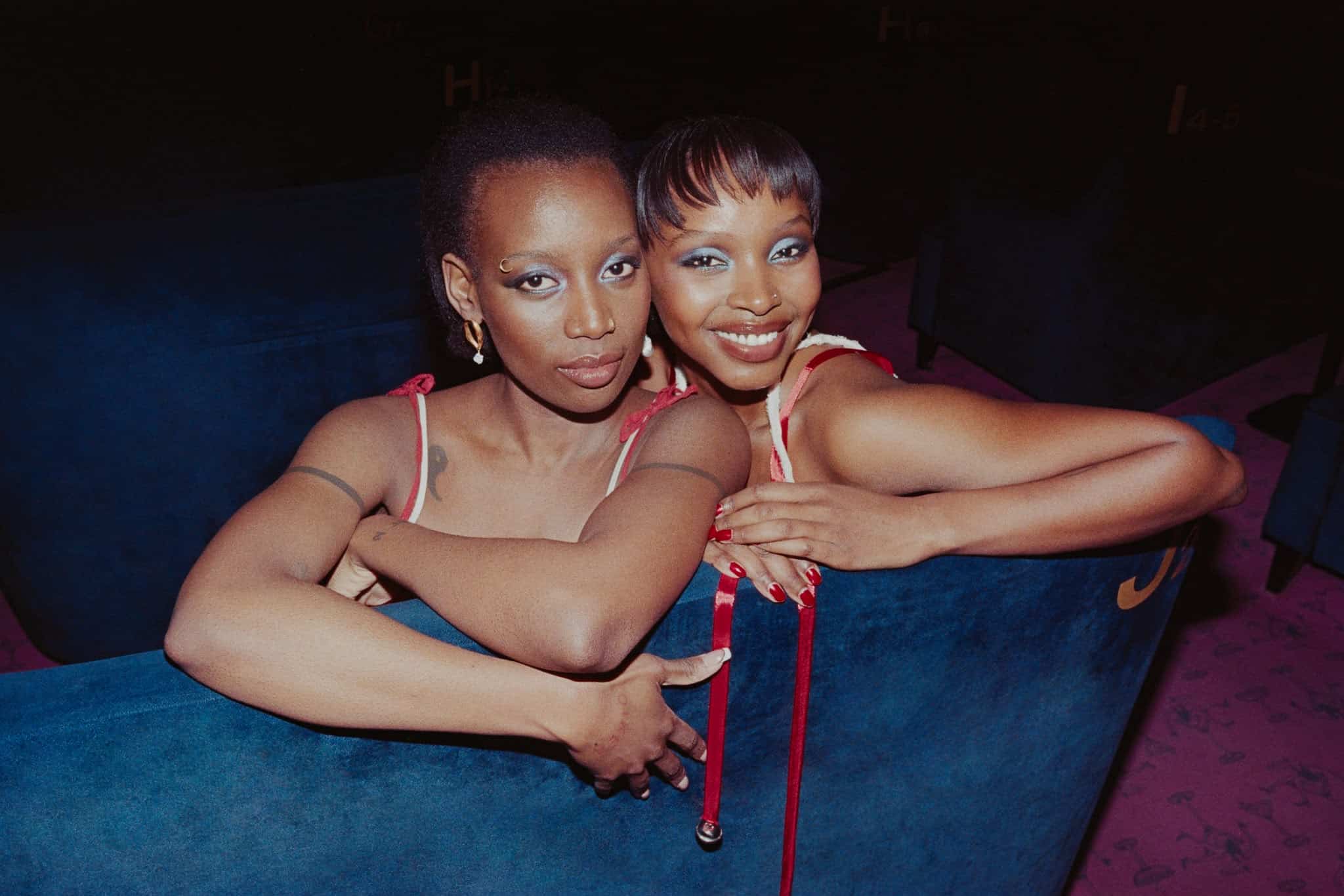
Photo: Kristian Presnal
Alice: The idea for Ubuntu Film Club was born in 2018 when I was living in London and learned about an event called Black Femme Film, which used to organise screenings and discussion nights in celebration of black cinema. I was so deeply inspired by them that I knew I had to bring a similar concept to Finland.
In January 2019, I organized our very first screening at the Museum of Impossible Forms in Kontula. I invited friends and acquaintances, and word of mouth ended up bringing in a huge crowd of young people. My friends Rewina Teklai and Fiona Musanga came along to help me with the arrangements that evening. We quickly realized how much easier and more enjoyable it was to run things as a team, and that’s how the three of us officially started working together!
Alice: Our mission from the very beginning has been deeply rooted in the philosophy of Ubuntu. It basically translates to “I am because you/we are”. In practice, that means our screenings and conversations are open to absolutely everyone, no matter their academic or social background or how complex the film’s subject matter might be.
We’ve also understood that our job isn’t to lecture or educate people. Instead, it is to make cinema more accessible and to create a safe space where everyone feels empowered to speak and to engage in conversations without needing any expertise. In turn, great conversations can help to expand narratives.
”We’ve (also) understood that our job isn’t to lecture or educate people. Instead, it is to make cinema more accessible and to create a safe space where everyone feels empowered to speak and to engage in conversations without needing any expertise.”
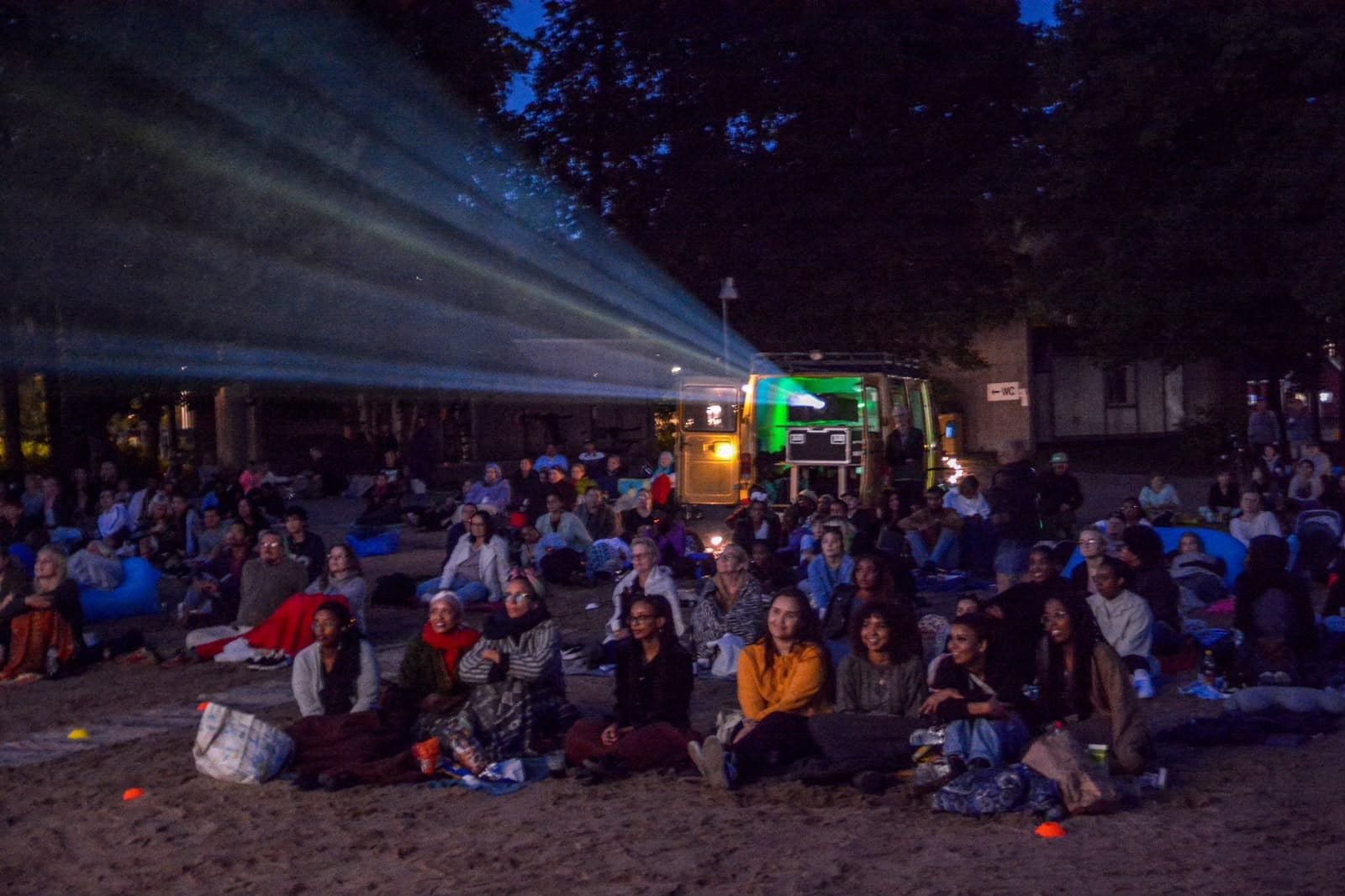
Photo: Reima Kangas
Fiona: It feels great to travel and represent our film club like this! It’s our first time screening abroad. Peer Review found us on Instagram and contacted us. So wonderful.
Alice: I feel ecstatic! We’ve always loved to collaborate with others, so to get to do that with our Nordic neighbours just feels amazing.
Alice: When we looked at the core question of Shifting Coordinates – how Black storytelling explores ritual, resistance, and imagination across the Nordics – we wanted our curation to be as expansive as possible. For us, resistance and imagination aren’t always loud or heavy; they exist in our day-to-day survival, our sacred spaces, and the taboos we choose to break.
Here’s why we chose these specific three films for the programme:
Khadar Ayderus Ahmed’s The Night Thief: Humour has long been a vital survival tactic and a form of resilience in Black communities, and Khadar has this incredible way of blending humour into his films. His films are witty but so insightful and they show how imagination can help us navigate life’s uncertainties.
Ima Iduozee’s Crown: This film speaks directly to the theme of ritual. In our communities, hair salons are so much more than just a place where you get your hair done. If you’re lucky, you get to grow up with the same hairdresser/barber, you develop your own deep relationship, and sometimes they can be the very first person to teach you how to love your hair. Going to the hair salon becomes a ritual, a healing one. They are central, sacred spaces.
Fiona Musanga’s Don’t Worry: Resistance also means having the courage to talk about the things we usually hide. Alcoholism and mental health struggles are still deeply taboo topics within our communities. By including Fiona’s raw, intimate look at addiction, we wanted to push the boundaries of what stories we are “allowed” to tell, breaking the silence to create space for healing.
”For us, resistance and imagination aren’t always loud or heavy; they live in our everyday survival, our sacred spaces, and the taboos we choose to break.”
Fiona: It means a lot. It’s important to show other countries close to us like Norway that we are here too! We have a culture, a way of life, a history, experiences and dreams we want to share.
We specifically want to shine a light on great filmmakers (me included!) who are bringing their visions to life. In this series, we are screening films by Ima Iduozee, Khadar Ahmed, and me. Other filmmakers I want to highlight are Iida Valmè, Mukhtar Abdi, and Zakariya Noor who are telling interesting stories in Finland at the moment.
Alice: It means the world to us that we get to showcase the talent that Finland has. In true Finnish culture, so many talented people tend to be shy about their art, but as Fiona said, we want to shout to the world that WE ARE HERE! As small as our community might be, it is generous with its resources, we help each other, we collaborate, we care, we rely on each other, and can depend on each other. And that’s a beautiful thing!
Fiona: More screenings, more travelling, more life!!! Continuing Ubuntu and having it live on after us would be so beautiful to see. For me, I dream of making big money so I can fund my art [laughs].
Alice: My biggest dream for Ubuntu is for it to continue to grow whilst remaining rooted in its mission. I want us to expand our craft as curators, and be able to connect with more audiences internationally, all for the love of cinema. And for me, my dream is to continue to be of service to my community and to create cool stuff!
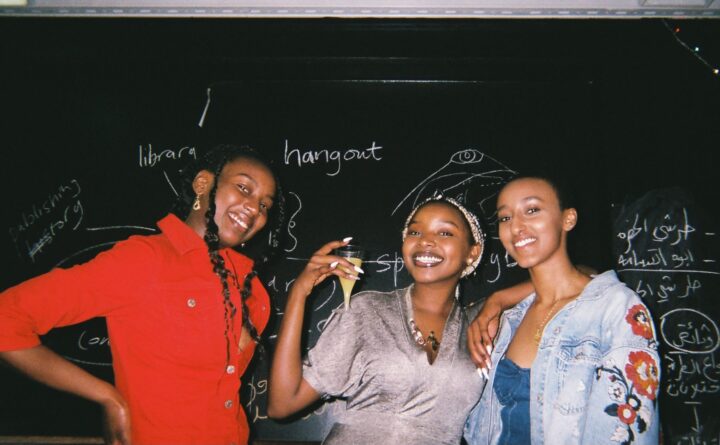
The founders of Ubuntu Film Club, Fiona Musanga, Alice Mutoni and Rewina Teklai. Photo: Courtesy of the founders.
Fiona Musanga is a Rwandan-Finnish visual artist, writer, rapper and filmmaker currently based in Helsinki, Finland. After writing, directing and producing two short films, titled Don’t Worry and Alonely, she shifted her focus onto music. In 2025 she independently released her first EP and in 2026 started working on her debut album. Musanga is also the co-founder of Ubuntu Film Club, a collective that hosts film screenings and panel discussions around Helsinki.
Alice Mutoni is a cultural curator and the co-founder of Ubuntu Film Club. The name Ubuntu derives from the Kinyarwanda language, which translates to ‘humanity’ and refers to the notion of being through others: I am because you are. This philosophy has informed her work throughout the years, leading to her current studies in Sustainable Business, bridging her passion(s) for culture and community impact.
–
The short film screening curated by Ubuntu is part of the June Exhibition 2026: Shifting Coordinates, a month-long institutional takeover transforming Kunstnerforbundet into a discursive platform centering Black Nordic artistic production across visual art, writing, film, and workshops. Shifting Coordinates is curated by the collective Peer Review, a collective platform for cultural analysis across Black visual culture for and by Africans and its diaspora in Oslo, established in 2024. The exhibition is led by the programme Atelier Kunstnerforbundet, which has generously hosted Peer Review’s sessions since the beginning.
The Finnish-Norwegian Cultural Institute has supported the participation of Finland-based artists in the exhibition and programme.