
Publisert 9.12.2025
Taylor Alaina Liebenstein Smith (born in 1993) is an American, French-naturalised visual artist currently based in Norway who is working at the intersection of analogue and biological media. She collaborates with scientists, poets, dancers, and other species to deconstruct perceived boundaries between scientific and artistic knowledge through affect and attunement to more-than-human entities.
Elina Waage Mikalsen (born in 1992) is an interdisciplinary artist and musician from Romssa/Tromsø, Sápmi (NO). Her work with sound is a blend of modern technology and traditional Sámi sound. She works with sound, textile, performance, text and installation. In her sound practice, she often mixes field recordings, voice, electronics and home-built instruments.
Taylor and Elina took part in Field_Notes Bioart Society’s bi-annual field laboratory. The residency was organised in Kilpisjärvi, Sápmi (FI) between 14 and 24 September 2025.
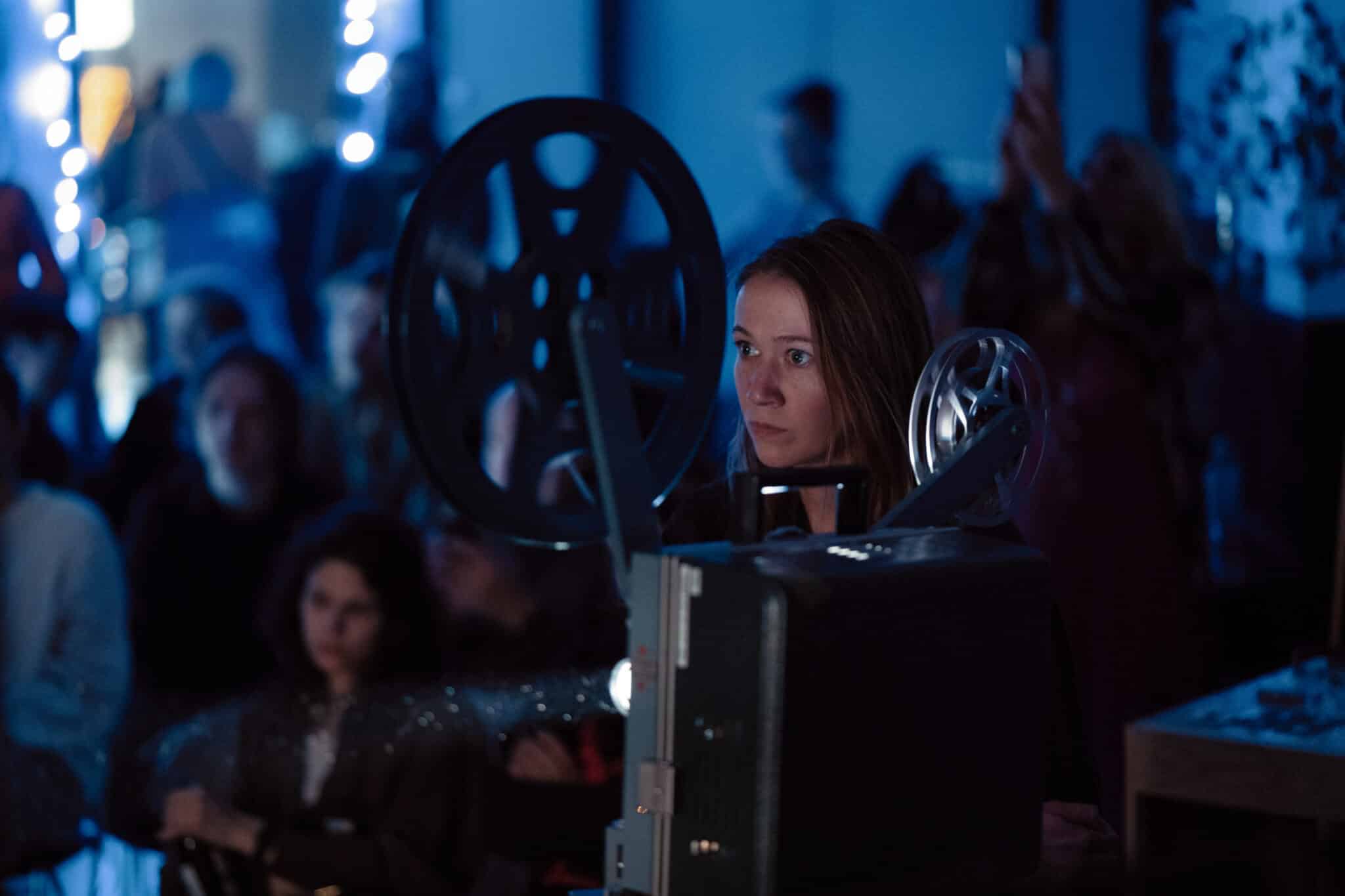
Taylor Smith. Photo: Andrejs Strokins
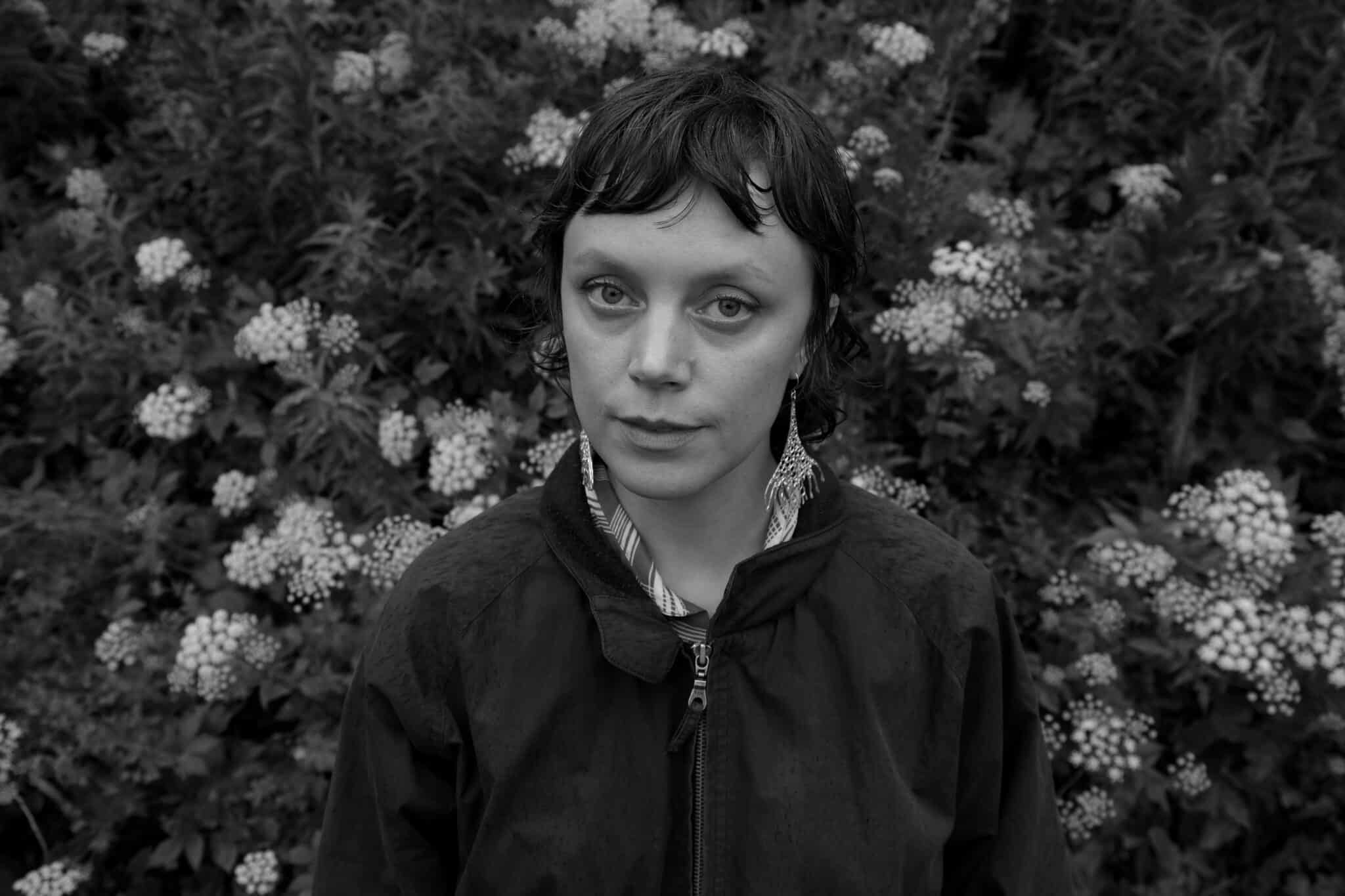
Elina Waage Mikalsen. Photo: Magnus Holmen
Taylor, seeing as this was a residency within Sápmi, what are your experiences with Nordic collaboration?
I’ve only been based in Oslo for three years, but have participated in several residencies and workshops in Sápmi, Norway, and Finland. This was my third visit to Gilbbesjávri/Kilpisjärvi, and each experience deepened my relationship to the site.These visits have all been transformative moments in the development of my practice.
In September 2024, I also accompanied a group of permafrost researchers from the University of Oslo to Áidejávri and Iškoras, two permafrost peatland areas in Sápmi. The geoscientists I travelled with are from the university’s Centre for Biogeochemistry in the Anthropocene. I filmed and observed them taking permafrost, gas, and water samples in an attempt to understand the impacts of climate change on permafrost thaw, and how this is transforming these subarctic tundra ecosystems. This collaboration resulted in my solo exhibition A feeling of longing that freezes and thaws at Atelier Nord in Oslo and, as a result, I’m now collaborating on a new project with other researchers from the University of Oslo.
I’ve also participated in residencies at MUSTARINDA and the KulttuuriKauppila Art Centre in Finland, as well as a workshop in Helsinki via the Bioart Society, which have also been very important for my work.
You have a deep connection to nature that can be seen in your art. Did this residency above the Arctic Circle affect you or inspire something new?
In order to develop a genuine, meaningful connection to a particular landscape or ecosystem, I need to spend at least a few intensive weeks there, and preferably return several times over the course of many years. I find it essential to experience the place in isolation, but also in dialogue with locals, visitors, researchers, and other artists in order to contextualise my own subjective experience.
I find the subarctic tundra landscapes of Sápmi, including Gilbbesjávri, Áidejávri, and Iškoras incredibly powerful, and demanding a particular kind of solitary attention. They are beautiful, but not necessarily ‘spectacular’ – to me, they have a character that is harsh and clear, humble and grounding. I was lucky to be able to visit Gilbbesjávri both alone and as part of a group. Although I learnt so much seeing the place through others’ eyes and ears, I realised that the land already had more than enough to say, and required my full and constant attention.
In order to develop a genuine, meaningful connection to a particular landscape or ecosystem, I need to spend at least a few intensive weeks there, and preferably return several times over the course of many years. I find it essential to experience the place in isolation, but also in dialogue with locals, visitors, researchers, and other artists in order to contextualise my own subjective experience.
– Taylor Smith
Elina, during your residency you got to be a part of a multinational and multidisciplinary team, how did you find the experience?
I found it very educational and inspiring, and I learned a lot from the long conversations and thinking we did together. To be together as such a big group for that amount of time, makes one both exhausted, but also breaks down barriers and allows for vulnerability. I thought the “always thinking further” that we did while discussing was really fruitful.
Did you gain a new perspective from the residency in relation to the already strong nature connection Sámi people have?
I have grown up with Gilbbesjávri as my backyard so to speak, it’s close to both Tromsø and Olmmáivággi/Manndalen, which are places I grew up. I was looking forward to getting to know the area better by staying there for a longer time. I think we all have work to do when it comes to connecting to the place and people of the places we come and go, also considering the history of the research station we stayed on, and the history of research done on Sámi people throughout time. To me as a sea-Sámi person I appreciated spending time in an area that is so closely connected to the coast and also my own family history.
I think we all have work to do when it comes to connecting to the place and people of the places we come and go, also considering the history of the research station we stayed on, and the history of research done on Sámi people throughout time.
– Elina Waage Mikalsen
What is the value of these types of residencies to you as an artist?
Taylor: It’s an incredible privilege to be able to work in places like Gilbbesjávri as an artist. There are, of course, many different types of residencies, and the more solitary, project-based residencies I have participated in are completely different from group, discussion, or workshop-based residencies such as Field_Notes. The more solitary residencies have been essential to my development as an individual artist. They give the time, space, and deep concentration necessary to produce meaningful work. However, these experiences are also psychologically demanding and can be extremely isolating. With Field_Notes and other group residences, it has been especially gratifying to come to a place without a project, and to instead focus on the human, social context that my artistic practice is equally part of and dependent on.
Elina: It is definitely to meet people different to oneself and spend time together. It’s a privilege to actually have time to talk and do things together. I spent a lot of time listening to others, who expanded my own thinking. The shared experience of intense socialisation, hiking, eating and talking together is a really valuable one.
Field_Notes deconstructs the concept of the traditional scientific laboratory in favour of research and knowledge that are situated and responsive to locales and contexts. Did the residency give you new insight on the way scientific knowledge is produced outside of the traditional laboratory?
Taylor: Coming back to the Gilbbesjávri Biological Station with a group of artists and cultural practitioners from many different countries and backgrounds shed a very different light on the context of the station’s existence and the research that takes place there. I learnt a great deal more about Sámi history and gained a better cultural understanding of the land and the methodologies that guide the long-term experiments and research projects that take place at the station and, moreover, how these different understandings of the land lead to both conflicts and collaborations. It was completely different from my experiences of collaborating with scientists in biological research stations where I’m often the only artist present. Although the tendency during Field_Notes was to be very critical towards scientific research and methods, in equal measure I found myself questioning and critiquing artistic motivations for coming to a place like Gilbbesjávri. I think Field_Notes was an attempt to push and pull different perspectives, to shift back and forth between Sámi, local, visitor, tourist, researcher, artist, curator and more. It was a means of coming to terms with just how complex the network of relationships that connects humans and other organisms to this unique place really is.
Elina: Yes definitely. I myself haven’t really worked within the intersection of art and science in the way Bioart Society does, but am more interested in Sámi ways of producing and sharing knowledge, and the question of science might be differently understood from a Sámi perspective. Still, it was very cool to get a glimpse into the other artists and thinkers’ ways of working and interacting with land and the concept of science.
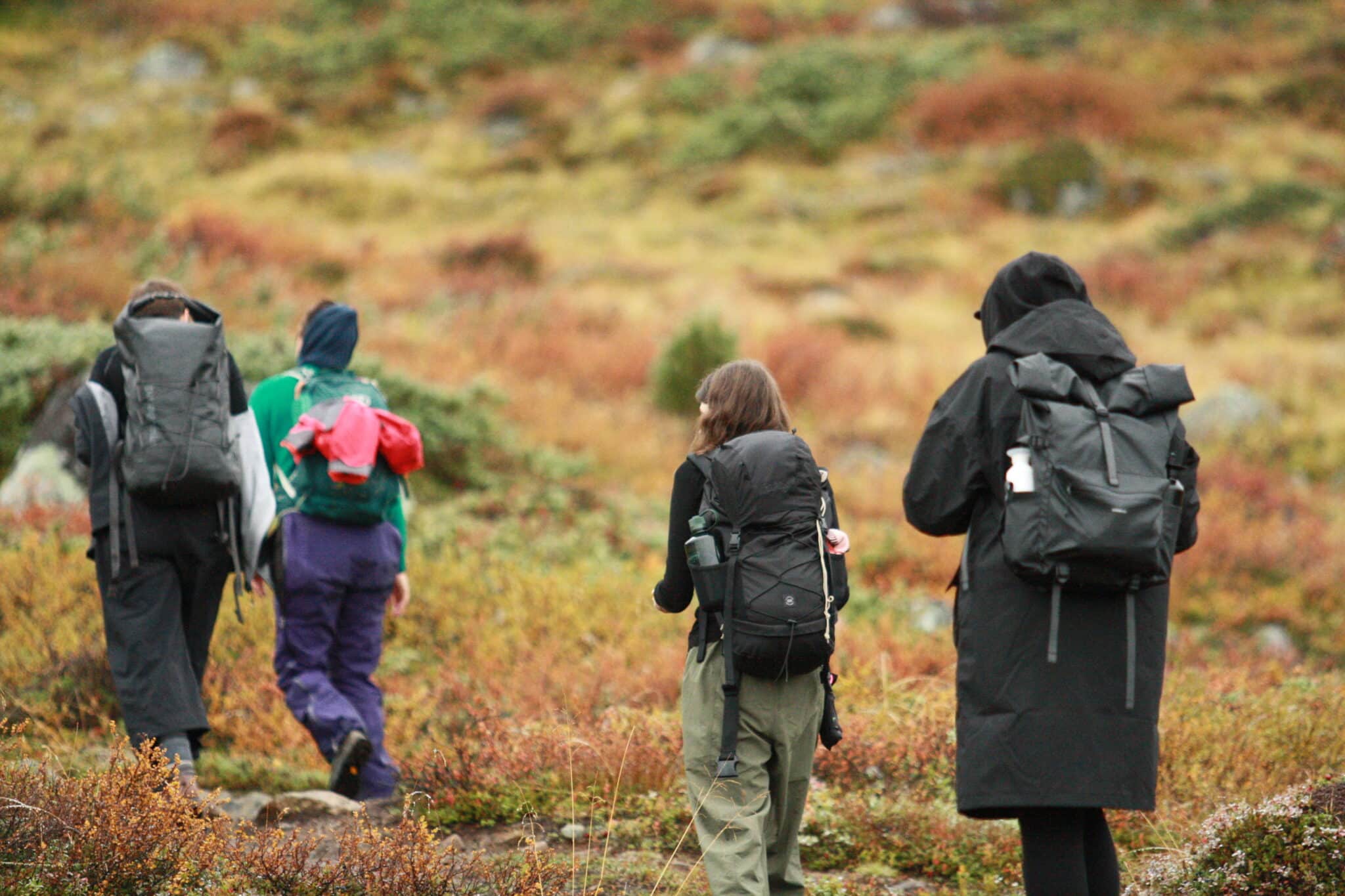
Photo: Milla Millasnoore / Bioart Society
Did this residency inspire new projects for you? Is there a possibility for a collaboration with some of the other residents?
Taylor: Although I did some filming while I was there, I didn’t come to Field_Notes with a ‘project’ mindset. So I can’t say that it necessarily inspired new projects, but rather both questioned and re-affirmed my artistic motivations and the ideologies that guide my practice as a whole. I think things became more clear, more defined, but also blurrier in some areas. It was a really wonderful, kind group of people and I’m sure I’ll see many of them again – perhaps to collaborate, or perhaps to just keep the conversations going.
Elina: Not yet, but I got some really valuable feedback on a project I was working on that helped me to approach it from a different angle than I was going to before. I definitely think there will be collaborations later, I met some truly wonderful people at the residency!
Bioart Society’s residency responds to the concept and practice of Living Methodologies. Field_Notes deconstructs the concept of the traditional scientific laboratory in favour of research and knowledge that are situated in relation to and responsive to locales and contexts. The residency was a part of the Creative Europe project Rewilding Cultures 2022–2026 which aims to foster and reshape new perspectives on various aspects of artistic and creative processes including research, production, presentation, and dissemination. Simultaneously, it underscores the significance of responsible participation, particularly regarding environmental sustainability.
–
The Finnish-Norwegian Cultural Institute supported the participation of artists based in Norway. This marked the institute’s first collaboration on a residency in Finland and enabled a new residency opportunity for Norway-based artists.